
Many triathletes spend dozens of hours and thousands of dollars doing aerodynamic testing for their bicycling positions. This can take several forms, the most popular being time in a wind tunnel in which air is blown over a stationary rider. Athletes will try different race suits, helmets, water bottle positions, handlebar heights and saddles to determine which setup works the fastest for them. This is a clinically precise method, but often not real-world enough. During a race it’s rare that you’re seated just so, with your arms exactly one way and your head tucked just right.
A more real-world method is open road testing. This requires a variety of sensors, a long straight road, and a Pitot-Static tube which is like a cone sticking out of the handlebars to measure the relative velocity of the air hitting the bike. The drawback to open road testing is that headwind, tailwind, or passing cars impact the direction of the wind so not every ride will be the same. So perhaps this is too much real-world.
Lastly, and to some the most preferred method, is in a velodrome. In this scenario the rider uses a highly accurate cycling power meter with precise stationary speed sensors to calculate the aerodynamic forces. In an indoor velodrome, the ground speed of the bike equals the airspeed because the air is perfectly still.
I have none of these things. But what I do have is math and AI.
First I uploaded several pictures of myself on my race bike in slightly different positions. This involved raising my aerobars, moving my seat forward and adjusting my head tilt. Here are several example pictures. In each one AI gave me feedback on what is the most optimal adjustment to make. However, there is a limit to the amount of “crunch” you can put into a body on a bike without impacting your ability to pedal. So AI gave me a position that was optimally aero, but I wasn’t able to ride as effectively as before. It’s all about finding that middle ground.
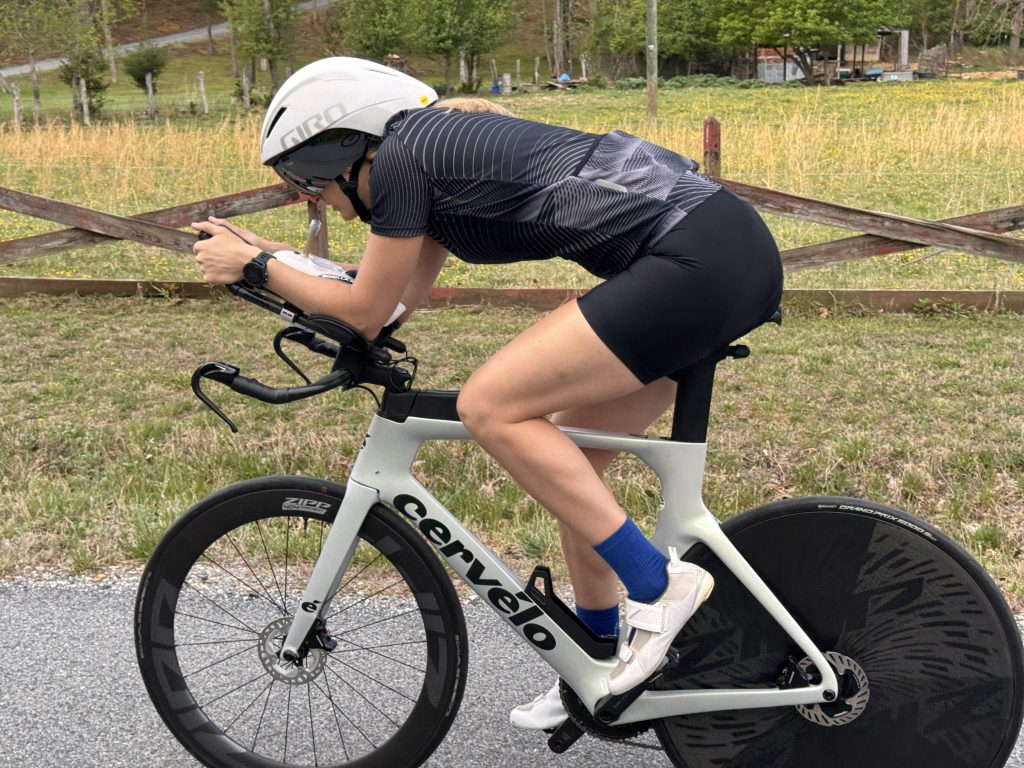
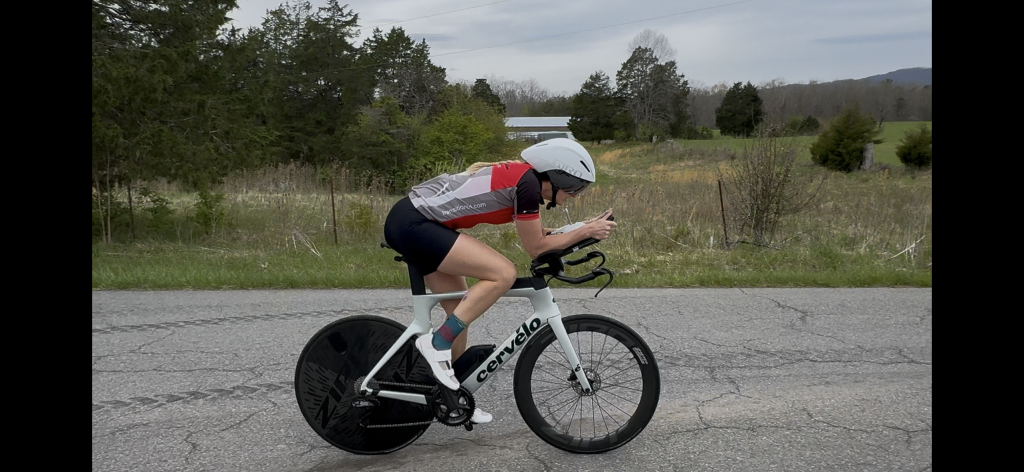
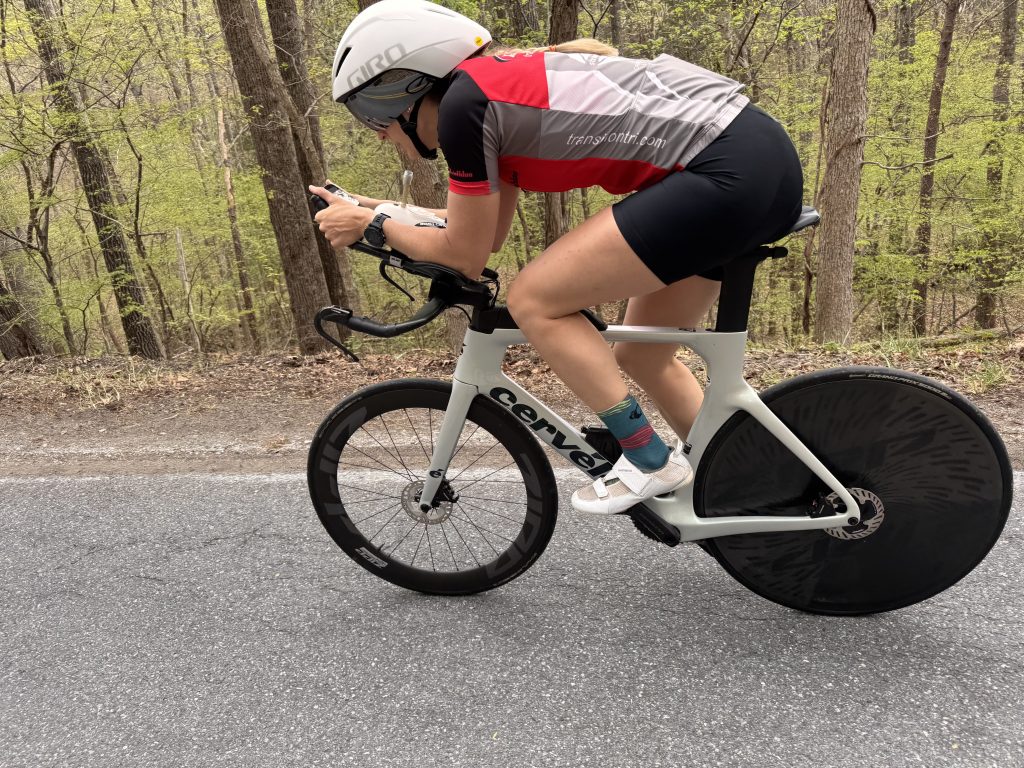
Pictures were the first step. I then took data from my Garmin bike computer of a route I have ridden 3x over the last 1.5 years, each with a slightly different position on the bike. I uploaded the second by second data, consisting of speed, elevation, power, and temperature to name a few, and asked AI to compare. It then calculated the CdA, which is the coefficient of drag, for each ride. I was able to determine which setup was the most aero and compare that to which ones I felt the most comfortable in.
A big part of triathlon is working really hard on the bike while saving enough energy and muscular comfort to run afterwards. I found in some positions I didn’t have to work very hard, but the muscles I engaged were critical running muscles, so after the ride my run suffered more than usual.
It’s super fascinating! Especially if you’re into science and math. Which I sometimes am. All that to say, the position I have now is as aero as I can be, but maintains enough comfort I can run afterwards.
Of course there’s always the classic AI caveat, if I ask AI a bunch of questions in a row but catch it making a mistake, I always hold it accountable. And it always says, “you’re right to call me on that, I did assume xyz and that’s not correct.”
I saw a joke along those lines:
Person: Hey AI did you do the dishes?
AI: Yes, I did do the dishes.
Person: Then why don’t I see dishes in the dishwasher?
AI: Yes, that’s a great catch. I didn’t do the dishes.
Kind of like parenting, hey?

Turns out the orange lizards are actually young salamanders, technically they’re regular blue salamanders that are in the “teenage years of life” according to Google. The orange signifies toxicity. Much like human teenagers….
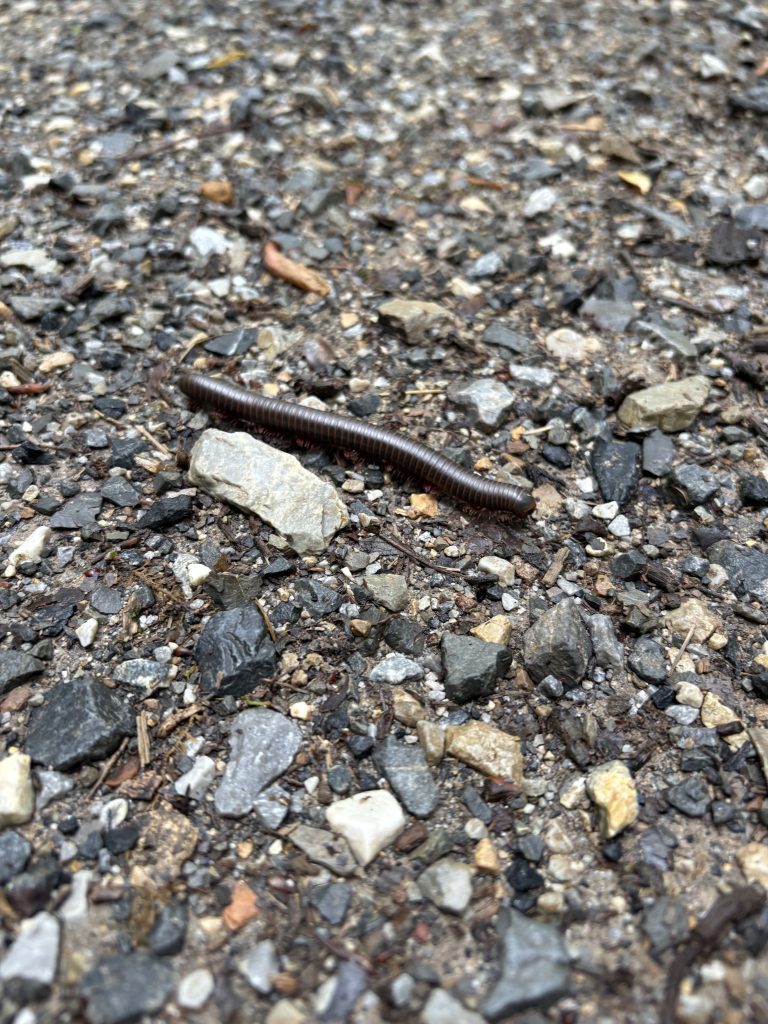
Millipedes are gross.
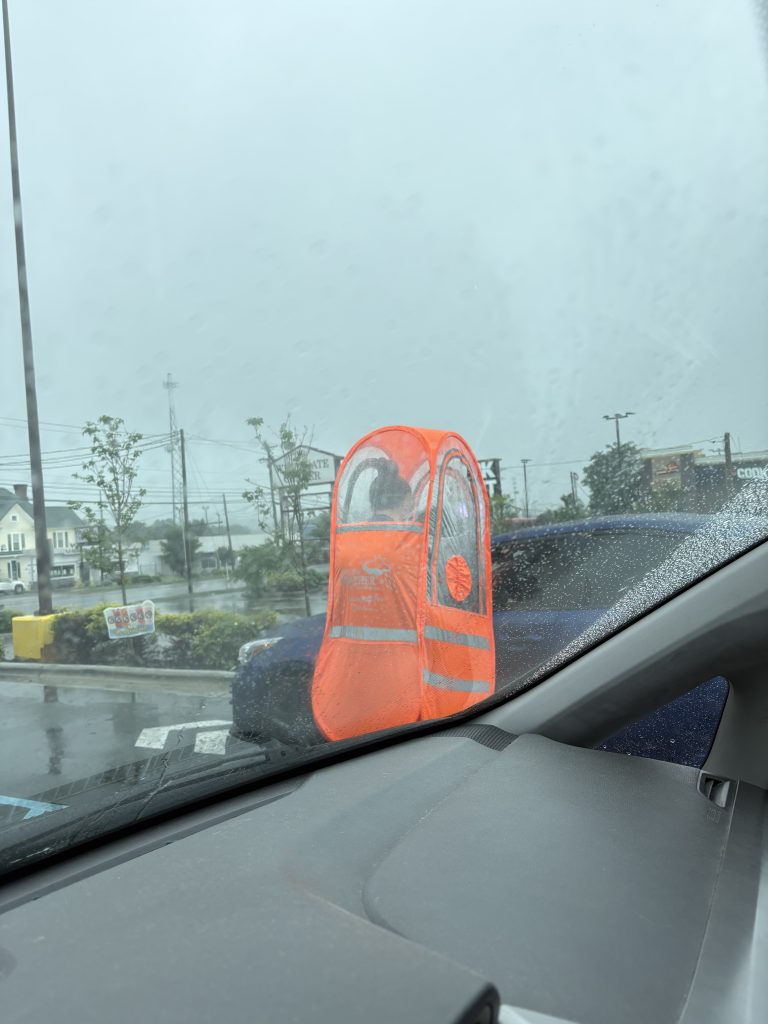
The drive-thru orange zoot suit was not spotted on the trail but it was spotted in the wild and made me laugh out loud so I had to share it.
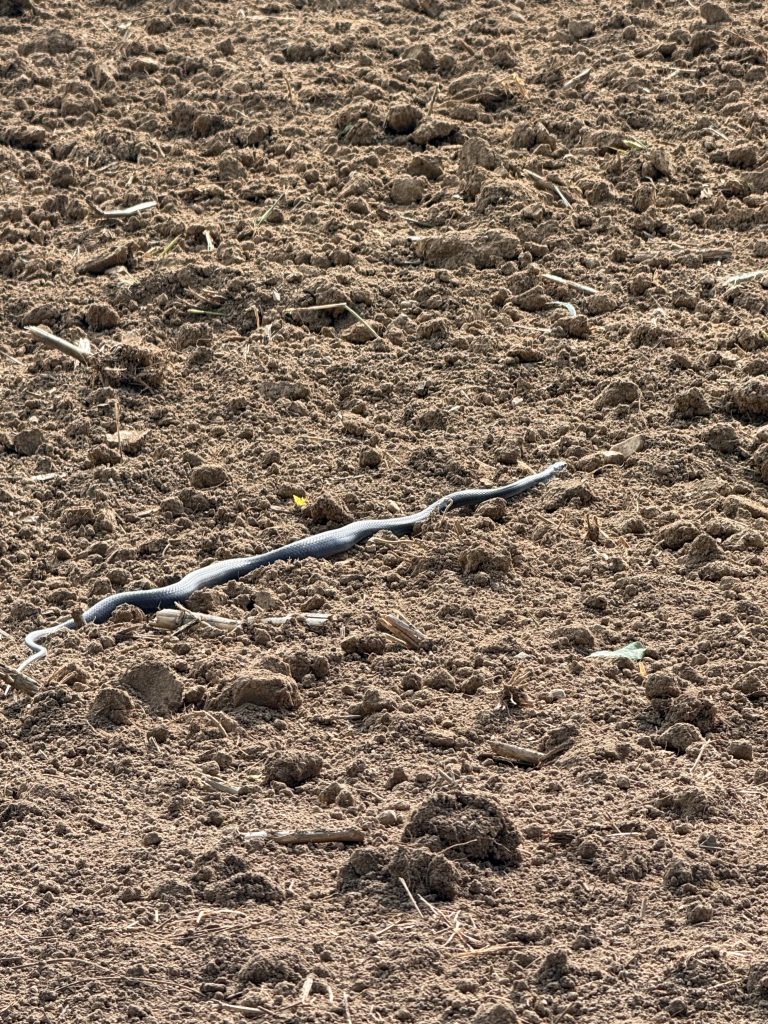
Yes it’s a snake yes it’s a snake! This was spotted by Hubs on a bike ride. Still counts.
Discover more from Tri Storm
Subscribe to get the latest posts sent to your email.